 Speech Therapy Consulting
Speech Therapy Consulting
Speech Therapy Consulting
Pediatric Speech Therapy · Dixon, CA
Expert therapy for expressive and receptive language delays. Free consultation. Insurance accepted.

No obligation. We respond within one business day.
Language delays affect how children understand and use words. There are two primary types, and children may have difficulties with one or both.
Reference: Tomblin et al. (1997); ASHA Practice Portal. 1 in 14 children have a language delay or disorder.
These milestones help identify whether your child's language development is on track.
| Age | Receptive (Understanding) | Expressive (Speaking) |
|---|---|---|
| 12-18 months | Follows simple commands; points to objects | Uses 5-20 words; begins labeling |
| 18-24 months | Points to body parts; identifies pictures | 50+ words; two-word phrases |
| 2-3 years | Understands "who," "what," "where" | 200+ words; 3-word sentences |
| 3-4 years | Follows 2-step directions | 4-5 word sentences; tells simple stories |
| 4-5 years | Understands most conversational speech | Complex sentences; narrates events |
Source: ASHA, Speech-Language Development Milestones; Tomblin et al. (1997).
Structured, engaging sessions that build your child's ability to understand and use language effectively.
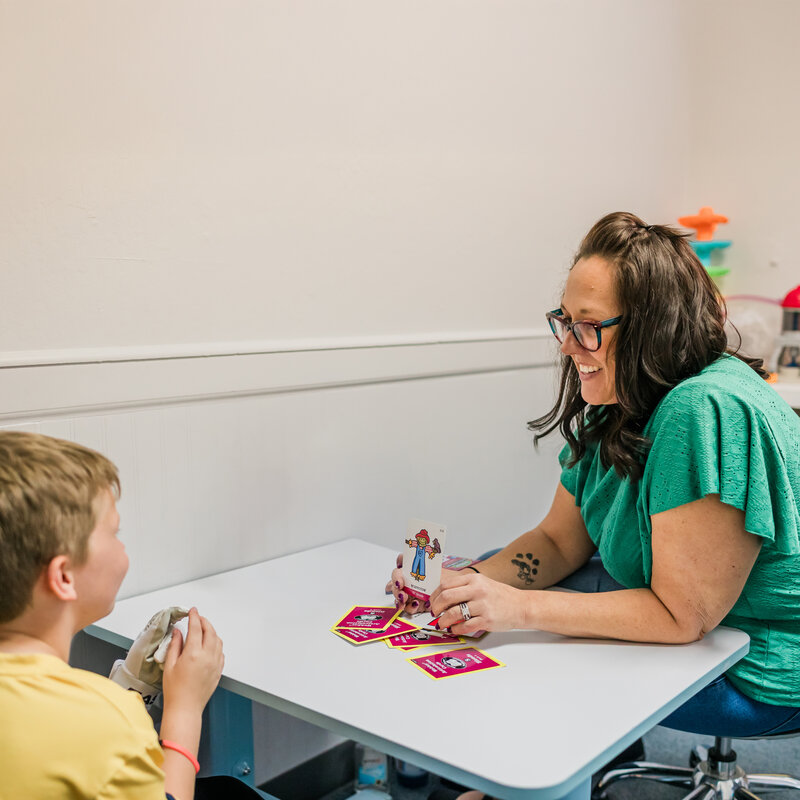
We target both receptive and expressive language skills through age-appropriate activities that keep your child engaged while building critical communication abilities.
Children with language delays are 6x more likely to have reading difficulties (Tomblin et al.).
"Our son was diagnosed with Autism at the age of 4. The first services we received was speech therapy as he was unable to express himself. We were lucky enough to have been paired with Stacey. Our son has been in speech therapy for almost a year now and has improved so much."
— Lopez Family, Dixon, CA"STC helped me ease my daughter into attending sessions independently instead of needing me to accompany her to every session, which has given her more confidence. We've experienced other speech therapy service providers and STC is by far our favorite. It feels like a second home."— Ann & Rose, Vacaville, CA
A language delay means a child is developing language in the typical order but at a slower rate. A language disorder means the pattern of development is atypical. Both benefit from speech-language therapy, and a comprehensive evaluation determines the distinction.
Approximately 1 in 14 children (about 7%) have a language disorder or delay. Children with untreated language delays are 6 times more likely to have reading difficulties in school.
Language delays can result from many factors including hearing loss, developmental conditions, limited language exposure, or sometimes no identifiable cause. A comprehensive evaluation helps determine contributing factors and appropriate treatment.
We accept Sutter HMO, Kaiser, Cigna, Blue Shield PPO, Western Health Advantage, and North Bay Regional Center for children ages 0-3.
Some children with mild delays do catch up, but research shows that children with language delays are 6 times more likely to have reading difficulties. Early intervention significantly improves long-term academic and social outcomes.
Schedule a free, no-obligation consultation to discuss your child's language development.
Or call (707) 366-5246